Maca root has gone from a staple crop in the high Andes to one of the most recognizable ingredients in men's vitality supplements. Here's its history and what the clinical research actually shows.
A Peruvian Staple for Generations
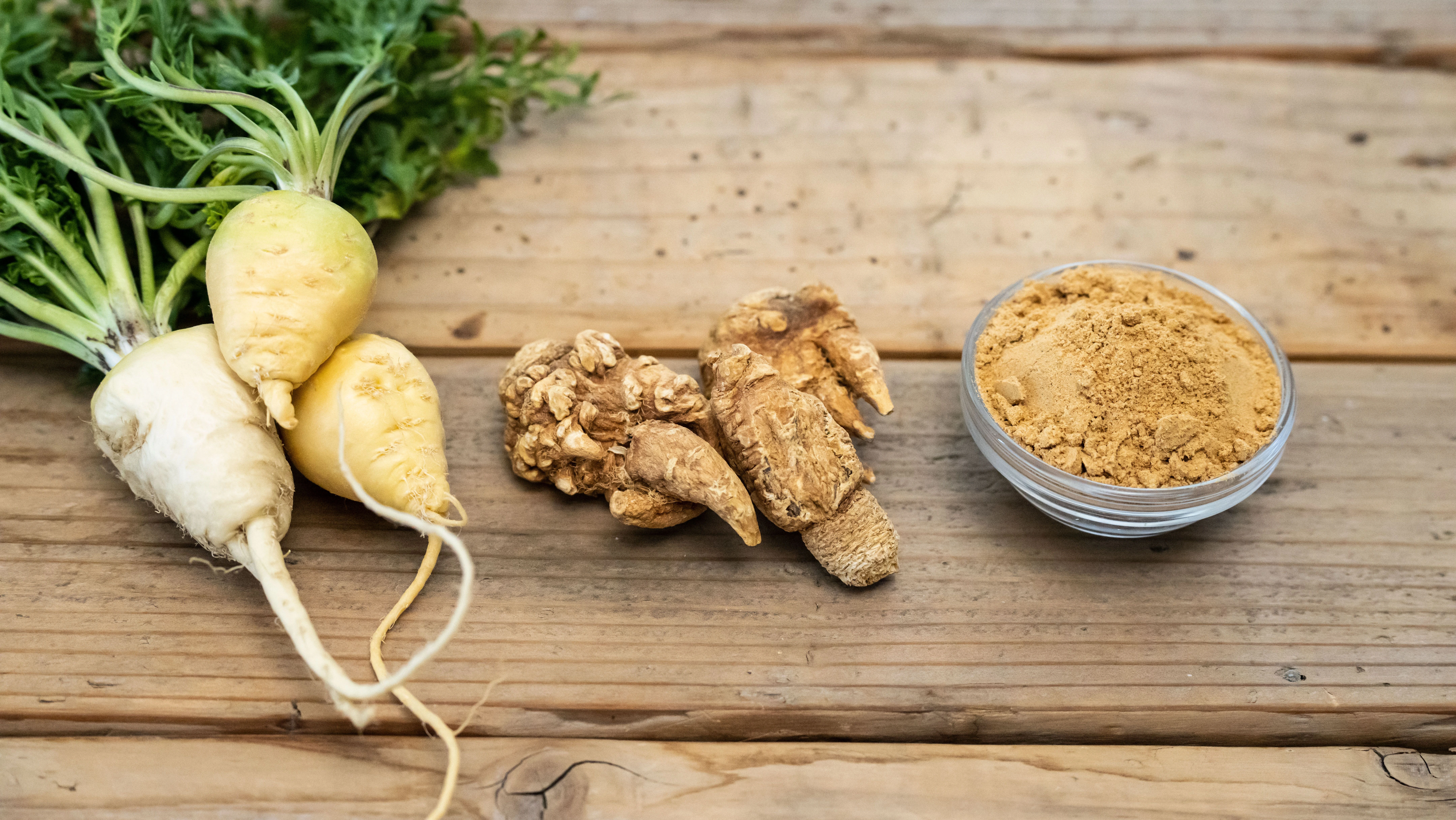
Maca (Lepidium meyenii) is a cruciferous root crop native to the high plateaus of the Peruvian Andes, grown at altitudes where few other crops survive. For generations, Andean communities have relied on it as both a food staple and a traditional remedy for energy and stamina, eaten much like a root vegetable rather than taken as a concentrated extract.
Its traditional reputation as a fertility and vitality food long predates any clinical study — it was reportedly given to livestock to boost fertility before it became a human dietary staple.
What Modern Research Shows
Sexual Desire
A systematic review of randomized, placebo-controlled trials found maca had a positive effect on sexual desire in adult men after 8–12 weeks of consistent use — one of the more consistent findings in maca research. Gonzales, Evid Based Complement Alternat Med, PubMed 2012 →
Energy and Endurance
Maca's traditional use as an energy food has some research support, with studies exploring its role in stamina and endurance during physical activity.
Mood and Well-Being
Some research has also looked at maca's potential effect on mood, given its traditional standing as a general wellness tonic rather than a single-purpose remedy.
Safety Notes
Maca is generally well-tolerated as both a food and a supplement, with few reported side effects at typical doses. As with any new supplement, it's worth mentioning to your doctor if you have a thyroid condition, since maca is a cruciferous vegetable.
Why It's In BoostSteelX
Maca Root is included in BoostSteelX specifically for its research-supported role in libido and energy. You can see the full ingredient list and citations on our Scientific References page.
See the Full BoostSteelX Formula
Maca Root is one of 10 ingredients in BoostSteelX's daily formula.
🛒 See Current PricingThis article is for general educational purposes and is not medical advice. Sources: PubMed.
← Back to All Articles